Posts Tagged 'Isaiah'


ISAIAH, Part 7

Serious Questions for the Backslider, Isaiah 50:1—3

On of the controversial aspects of the book of Isaiah is the identity of “the servant.” It is vitally important to have a correct understanding of his identity if you want to interpret certain chapters where the servant is spoken of in a prophetic sense correctly. While most Christians view the “Suffering Servant” of Isaiah as Jesus Christ, Jews view him as the nation of Israel. However, the fact is, in Isaiah’s writings, there are two servants of the Lord, not one. There is the True or Perfect Servant of the Lord, who is identified prophetically as Jesus Christ, God’s only Son. But there is another, imperfect servant of the Lord, and that is the nation of Israel or Judah. A careful study of the context reveals which servant is being referenced at any given time.

As in chapter 42, in chapter 50 the True Servant of God is pictured as speaking to another of God’s servants, the rebellious servant, Israel.

Who is blind but my servant, and deaf like the messenger I send? Who is blind like the one in covenant with me, blind like the servant of the LORD? (Isaiah 42:19)

In chapter 49, the tension between the perfect Servant of God and the imperfect servant of God is poetically played out. Of the imperfect servant of God, some marvelous things are noted:

Listen to me, you islands; hear this, you distant nations: Before I was born the LORD called me; from my birth he has made mention of my name. He made my mouth like a sharpened sword, in the shadow of his hand he hid me; he made me into a polished arrow and concealed me in his quiver. He said to me, “You are my servant, Israel, in whom I will display my splendor.” (Isaiah 49:1—3)

But now, the sin of idolatry, which in God’s sight is a form of spiritual adultery, had become so prominent throughout the land that, when pictured as a marriage, Israel’s marriage covenant with the Lord had been broken.

The immediate context of this chapter is the Babylonian Captivity, which was yet to occur in Isaiah’s time, and Isaiah, even though he was writing as though the nation was exiled already, he was really preaching to a generation not yet born, and admonishing them to return to the Lord and to forsake their idolatrous tendencies.

We know that while Judah (referred to by Isaiah as “Israel”) was in exile, they murmured and complained against God on account of the severity of their condition. They had become, generally speaking, a nation of “backsliders.” Of course, not all the exiled Jews in Babylon and later Persia had stopped following Jehovah, a large number of them were estranged or separated from God. They had not ceased to be God’s people; God had not left them, in fact He was still trying to win them back, but they were stubborn in their rejection of them.

Backsliders, Christians who are separated from God, are slow to blame themselves for their present miserable condition. And being separated from God is a miserable condition because it usually involves bondage to one sin or another. But, as we see this these verses, the Lord, their “spiritual husband,” demands that they face the cause of their estrangement head on, deal with that cause or causes, and then return to Him.

Here are the questions the Lord, the spiritual Husband of all believers, puts to the backslidden Jews. These penetrating questions can also be put to any Christian today who has strayed from his faith.

1. Where is your mother’s certificate of divorce with which I sent her away? (verse 1)

Under the Law of Moses, and because of the hardness of their hearts, the Lord allowed a man to divorce (“cut” or “cast off,” really) his wife if she was found unfaithful, by giving her an official “bill of divorcement.” This bill was proof to the community that she had been put away by her husband:

If a man marries a woman who becomes displeasing to him because he finds something indecent about her, and he writes her a certificate of divorce, gives it to her and sends her from his house… (Deuteronomy 24:1)

Exiled as they were (or rather would be), Judah, the Lord’s wife, had assumed that God, her spiritual husband, had cut them off and was ignoring them. In other words, the exiled Jews were so unhappy, discontented and miserable, they simply concluded that God had dumped them, and was therefore not having anything further to do with them. They expressed as much in 40:27—

Why do you complain, Jacob? Why do you say, Israel, “My way is hidden from the LORD; my cause is disregarded by my God”?

But here God, Judah’s husband, says He had definitely NOT divorced her; He had served no papers or posted no bills. Poetically, God demands that these rebellious children, born in Babylon of backsliding parents, produce His “bill of divorcement,” providing the proof that God was to blame for their present miserable state. Of course, no such document existed on Earth or in Heaven because God had never divorced Himself from His people. In fact, the people were separated from God, but it was on account of their sins, not due to any action on His part.

…because of your transgressions your mother was sent away. (verse 1)

But your iniquities have separated you from your God; your sins have hidden his face from you, so that he will not hear. (Isaiah 59:2)

2. Or to which of my creditors did I sell you? (verse 1)

Another provision of the Law allowed a father, if he was oppressed with debt, to sell his children in order to pay that debt. That is the background of this question. God’s question to his wayward people was simply, “Did I sell you because of My poverty?” In other words, did God have to sell His children off one by one because He was too poor to keep them?

At first, this may seem like a ridiculous argument to make, but consider what caused many a backslider to turn on God. How many Christians have left God because He didn’t answer a prayer they prayed? Or because, in their eyes, He didn’t bless them enough? The notion that God is unable to supply all our needs is still a motivating factor in the decision of some believers to turn from God to seek other means to fill a need.

But the truth is, God has all the resources of Heaven and Earth at His disposal and is therefore able to meet all our needs! It’s all matter of perception.

And my God will meet all your needs according to the riches of his glory in Christ Jesus. (Philippians 4:19)

And it’s all a matter of knowing what your real need is. Far too many believers get wrapped up in the temporal world; in things that they think will satisfy but never do because their need is spiritual and can only be met by the Lord. A Christian trying to find satisfaction from worldly things is as futile as trying force a square peg in a round hole.

Once again, the Lord’s answer is simple and direct:

Because of your sins you were sold… (verse 1)

If the people had been sold, it wasn’t God that had sold them! They had, in fact, sold themselves. God puts the blame His people’s present state squarely where it belonged: on their shoulders.

2. When I came, why was there no one? When I called, why was there no one to answer? (verse 2)

Verse 2 rebukes Judah’s unbelief. Even though the prophets of God had called to the people, nobody listened to them; nobody took their words seriously. The entirety of Hebrew history seems to be the story of God continuously reaching out to the people He loved so much, only to find the people either not interested or actively rebelling against Him.

You have neither heard nor understood; from of old your ears have not been open. Well do I know how treacherous you are; you were called a rebel from birth. (Isaiah 48:8)

This is a truly sad situation; it pictures a loving husband coming home to his bride and finding only an empty house. He called and called, yet she never answered. This pathetic story continues to this day with Christians who become have so dissatisfied with their backslidden condition, yet, inexplicably, they still refuse to pay attention to God’s call to repent and return. It’s the only way out of bondage into freedom for them, yet like the wayward wife, they just can’t see it.

Through the Holy Spirit, God still calls out to the self-oppressed backsliders. Thankfully, He doesn’t give up on them as easily as they gave up on Him!

3. Was my arm too short to deliver you? (verse 2)

Sin alone is what separates from God. The problem was never with God; the problem was with the Jews. The problem is with the backslider., who may have wandered from the fold, but can he wander so far as to be beyond the reach of God? This is a question every backslider must answer: Is God unable to take you back? Is the precious Blood of Jesus Christ to weak to redeem the backslider?

When we read this question in connection with what follows it, it becomes a tragic picture indeed:

By a mere rebuke I dry up the sea, I turn rivers into a desert; their fish rot for lack of water and die of thirst. (verse 2)

Here, the Lord is likely referring to the Red Sea and to the deliverance of the Hebrews from their Egyptian bondage. The phrase “a mere rebuke” shows just how simple it is for God to deliver His people. It was nothing to change the course of nature to help His people. The Lord had demonstrated His power to save in history and in nature, yet still the people refused to bend.

Salvation is a relatively simple thing; we tend to complicate it with with all kinds of “classes”: discipleship classes, baptism classes, and so on, but really, getting saved is a snap:

Everyone who calls on the name of the Lord will be saved. (Romans 10:13 and Joel 2:32)

That’s pretty simple! But for the backslider, for the one who has wandered from God, calling out to Him is a monumental task.

If we confess our sins, he is faithful and just and will forgive us our sins and purify us from all unrighteousness. (1 John 1:9)

That simple act of confession is very difficult for one who has known a close relationship with Christ. Pride, embarrassment, or anger, whatever the reason that keeps the backslider from owning up to their problem must be overcome if they are to return. And God wants them back!

5. Do I lack the strength to rescue you? (verse 2)

From outward appearances, it seemed as though God was unable to do anything to help the Jews during their Babylonian bondage. This was yet another accusation of the Jews; God was powerless to help them because if He could have, He would have. What’s particularly nefarious about this question is that not only did the Jews think this way, but because of their sin and refusal to come back to the Lord, it appeared to the Babylonians that their God was weak and powerless.

As long as a backslider remains in their backslidden state, they are dragging the Name and Character of the Lord into public dishonor.

And now what do I have here?” declares the LORD. “For my people have been taken away for nothing, and those who rule them mock,” declares the LORD. “And all day long my name is constantly blasphemed.” (Isaiah 52:5)

If ever there was a good reason to live righteously, this must be it! How the believer lives in public reflects the Character and Nature of his God!

As if to remind them of all the good things He has done for them, God speaks of His actions in their history and in nature:

I clothe the heavens with darkness and make sackcloth its covering. (verse 3)

Imagine the great condescension of God of having to remind His wayward children of all the things He had done for them. It was as though love was not reason enough to return to Him.

Imagine the great condescension of God in giving His only Son to die for us on the Cross?

Surely he took up our pain and bore our suffering, yet we considered him punished by God, stricken by him, and afflicted. But he was pierced for our transgressions, he was crushed for our iniquities; the punishment that brought us peace was on him, and by his wounds we are healed. We all, like sheep, have gone astray, each of us has turned to our own way; and the LORD has laid on him the iniquity of us all. (Isaiah 53:4—6)

Do you really think God lacks the power to save the backslider?

(c)  2011 WitzEnd

ISAIAH, Part 5

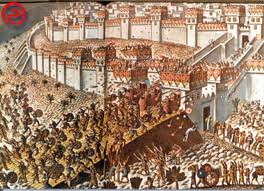
The Assyrian army taking a city.

The Power of Prayer

Isaiah 37:14—20

Hezekiah received the letter from the messengers and read it. Then he went up to the temple of the LORD and spread it out before the LORD. And Hezekiah prayed to the LORD… (Isaiah 37:14, 15)

At first blush, that seems like a strange thing to do. Why would King Hezekiah take his mail into the temple of the Lord and spread it open, as if to let the Lord read it. Understanding why leads us to see the amazing power of prayer.

1. Historical facts

a. Summary of history

Chapters 36 to 39 form a “historical interlude.” They break a string of prophecies and give us a glimpse of Isaiah’s world. Why do you suppose there are four full chapters of pure history sandwiched in between Isaiah’s prophecies concerning the government and judgment of God and the grace of God, that is, salvation instead of judgment? Most scholars cite three good reasons.

First, history from God’s perspective is often quite different from that of man’s perspective. God’s view of history is laced with great spiritual truths missing from secular history. One can only see these truths through eyes of faith; it is the Holy Spirit that enables us to see God’s hand and purpose in the affairs of man.

Second, the events that we read about in chapters 36 to 39 are found in three different locations in Scripture: 2 Kings 18—19; 2 Chronicles 29, 30; and here in Isaiah. We have to ask ourselves: Why did the Holy Spirit see fit to have three versions of this piece of Hebrew history in God’s Word? Without a doubt, the Lord has some special truth or truths for us to learn. Among the great lessons God wants us to learn, we see some really remarkable miracles taking place during these years:

  • The death angel slays 185,000 Assyrians (Isa. 37:36—38)

  • The sun moves backwards ten degrees on Ahaz’s sundial (Isa. 38:7, 8)

  • God heals Hezekiah and extends his life 15 years (Isa. 38:1—5)

Third, this section opens with the Kingdom of Assyria and closes with the Kingdom of Babylon, spanning the decline and rise of two world empires key in Hebrew history. In chapter 36, King Hezekiah deals with the invasion of Assyria under Sennacherib. Chapter 37 details Hezekiah’s prayer and the resultant destruction of the Assyrian army. Chapter 38 records Hezekiah’s illness, prayer, and healing. And in chapter 39, we see Hezekiah making a fool of himself.

b. Attack of the Assyrians

To set the scene for Hezekiah’s action of 37:14—20, we look back at chapter 36.

In the fourteenth year of King Hezekiah’s reign, Sennacherib king of Assyria attacked all the fortified cities of Judah and captured them. (36:1)

Sennacherib, King of Assyria, and his mighty army came down on Judah with an army as large as a swarm of locusts. He had three reasons for this attack on Judah:

  • Hezekiah had refused to pay the tribute to Assyria since the days of King Ahaz;

  • He had opened negotiations with Babylon and Egypt for the sake of an alliance against Assyria;

  • He had helped the Philistines of Ekron to rise against their king, who supported Assyria, and had kept that king in prison at Jerusalem.

Things were bleak in Judah, and the army of Assyria was facing the walls of Jerusalem when the commander of the army relayed a message to King Hezekiah, designed to undermine his confidence in his allies, in his God, in Judah’s military strength, and ultimately in Judah’s divine destiny.

Then the Assyrian turned his attention to the common Jew, speaking loudly to them, shut up behind the great wall, in Hebrew:

This is what the king says: Do not let Hezekiah deceive you. He cannot deliver you! (verse 14)

He tried to win the Jews over with promises of food and drink if they would just surrender to him and go with him to his land, a land as good as theirs. Worst of all, he tried to convince the people that their God was no better than all the other gods of all the other nations around Judah.

c. God’s response

Hezekiah wasn’t a good king, he was a truly great king. In 2 Chronicles 29:1 and 2, we are told that Hezekiah did what was right in the sight of the Lord, just as David had done. He loved Judah so much that that single fact alone was arguably his greatest weakness. At one point, he attempted to stave off the Assyrian invasion by bribing Sennacherib with gold he stripped off the temple (see the story in 2 Kings 18). However, the politically expedient policy of appeasement has never worked in history; you just can’t pay an evil power to be your friend, and so now the Assyrian army was just outside the walls of Jerusalem. Hezekiah turned to the Lord:

When King Hezekiah heard this, he tore his clothes and put on sackcloth and went into the temple of the LORD. (Isaiah 37:1)

The king did exactly the right thing in turning to the Lord for help. Here is a great lesson for the believer to lay hold of. You must ask for help before you can receive it. In this case, the help from God came in the form of advice from the prophet Isaiah. We don’t know what Hezekiah had in his mind when was in the temple praying, but God sent him Isaiah. This reminds us of what James wrote, “You have not because you ask not” (James 4:2). Isaiah’s message was startling and to the point:

Tell your master, ‘This is what the LORD says: Do not be afraid of what you have heard—those words with which the underlings of the king of Assyria have blasphemed me. Listen! When he hears a certain report, I will make him want to return to his own country, and there I will have him cut down with the sword.’” (Isa. 37:6, 7)

This must have been welcome news indeed for the king to hear! It was literally fulfilled, but not after the Assyrian tried one more time to capture Jerusalem by send Hezekiah one last letter.

2. What Hezekiah did

a. The cause of the king’s trouble

This brings us to the reason why Hezekiah took his mail into the temple that day. He received a final letter from the Assyrian and it caused the king great trouble. We don’t know what was in that letter, but it must have been disheartening. Consider the context. Hezekiah had just been in the temple praying about this dreadful situation. God had seemingly answered Hezekiah’s prayer through Isaiah; Judah was to be spared and the Assyrian army would be destroyed. But now another threatening letter; what did it mean? Had God changed His mind? Was Isaiah wrong in the first place?

A lot of Christians have found themselves in this exact same uncomfortable position. They have had prayers answered, been the recipients of great blessings and even miracles, yet trouble continues to come at them. They do the right thing and live their faith yet they continually hear from the “messenger of Satan.” Like it or not, the enemy of our souls never rests, and he will be active until his bitter end. That can be very disheartening to the child of God. This is why Peter wrote these words:

Cast all your anxiety on him because he cares for you. Be alert and of sober mind. Your enemy the devil prowls around like a roaring lion looking for someone to devour. Resist him, standing firm in the faith, because you know that your fellow believers throughout the world are undergoing the same kind of sufferings. (1 Peter 5:7—9)

His advice is worth following. When you get anxious, tell God about it. Keep your wits about you. Be aware that the devil isn’t going anywhere soon and eventually he will set his sights on you. This happens to every Christian, no believer is exempt, not even the greatest saint of the church! So resist the devil; stand firm in the faith. In other words, don’t feel sorry for yourself when you get bad news! It happens to us all; just keep trusting in the Lord and let the Lord deal with it.

b. What the king did

Verse 14 tells us that Hezekiah spread out this letter before the Lord in the temple. He didn’t read it to everybody, he let the Lord read it personally. Hebrews 11:6 tells us that when we come the God, we must come to Him in faith, believing that He exists. In other words, we must come to God in a personal way, as we would come to any human being, believing Him to be that real, which He is. Hezekiah did just that; he spread open this letter as though God were right there in front of him, ready to read it.

c. How the king prayed

And Hezekiah prayed to the LORD. (verse 15)

Is there anything else a human being can do when faced with a crisis to which his resources are inadequate? Hezekiah’s prayer is jam-packed with Biblical theology from beginning to end. True prayer never denies the facts, rather, it faces them head on but interprets them theologically. That’s how Hezekiah prayed. That’s also how the early church prayed in Acts 4:24—31.

Sovereign Lord,” they said, “you made the heaven and the earth and the sea, and everything in them.” (Acts 4:24b)

Sennacherib’s challenge was in essence a showdown. But it wasn’t between Nehemiah and the Assyrian commander. It wasn’t between the Jews and the Assyrians. It was between the real and the phony; between the truth and lies. Hezekiah’s prayer indicates that he realized that and he expressed it the words he chose.

  • LORD Almighty, the God of Israel… The first thing the king acknowledged was that even though he was the king, there was One greater than he, and it was really God who was over Israel. Other nations had their gods, other people worshiped their rulers, but not Israel. Israel’s God was Yahweh.

  • you alone are God over all the kingdoms of the earth. Not only is Yahweh sovereign over Israel, He is sovereign over all the kingdoms of the earth. This is a profound statement. It indicates that God is literally overseeing what is going on in every nation, not just Israel. Psalm 102:15–The nations will fear the name of the LORD, all the kings of the earth will revere your glory.

  • You have made heaven and earth. If Yahweh made all that can be seen, it’s reasonable to see Him as ruler over it!

  • ...they were not gods but only wood and stone, fashioned by human hands. Other nations have come and gone and their so-called gods have perished because unlike Yahweh, they were not real

  • Now, LORD our God, deliver us from his hand, so that all the kingdoms of the earth may know that you, LORD, are the only God. Now all the nations needed to see who really is God alone. He cannot be stopped by the plans of any man. Fire cannot stop Him because Yahweh was not fashioned by the hands of man; He is an eternal spirit who dwells among the angels.

Linked to Judah’s deliverance—their salvation—was a revelation of God to all people, acknowledging that Yahweh was God alone. So, for Hezekiah, the salvation of Israel meant the vindication of God among the heathen, and the possibility that they, like Israel, would come to know Him as God alone.

3. Hezekiah’s success

Then the angel of the LORD went out and put to death a hundred and eighty-five thousand in the Assyrian camp. When the people got up the next morning—there were all the dead bodies! (verse 36)

“The angel of the Lord” is described as “going out.” The Hebrew word is usually used of going forward in battle. Though the “angel of the Lord” is distinct from God, He is identified with Him. It was God who fought for Hezekiah and the Jews. How did He slay all those soldiers?

The Greek historian Herodotus wrote that that night Sennacherib’s camp became infested with rats that destroyed the soldier’s weapons and killed the soldiers. In the ancient east, rats are usually identified with some sort of terrible plague. However God did it, He decimated the Assyrian army and those left alive beat a hasty retreat.

But God wasn’t finished with the Assyrians just yet. There is a span of some twenty years between verses 37 and 38, but Isaiah seems to indicate that all the events were part of God’s judgment on Sennacherib and the Assyrians:

One day, while he was worshiping in the temple of his god Nisrok, his sons Adrammelek and Sharezer killed him with the sword…

Sennacherib was assassinated while worshiping his false God. The God of the Jews protected them, Sennacherib’s gods did nothing for him. This was more than enough evidence that Yahweh was real.

The power of prayer is evidenced by success.  Sometimes that success is a long time in coming.  Ultimately, Hezekiah’s prayer was completely answered after his death.  That’s a good thing to remember when we pray!  We need to pray in faith believing for an answer.  We need to look for the answer.  But we need to realize that God’s time isn’t necessarily ours.

Is there any sadness or sorrow so great or circumstance so frustrating that the prayer of faith can’t bring deliverance and success? The words of Jesus affirm what King Hezekiah knew:

Truly I tell you, if you have faith as small as a mustard seed, you can say to this mountain, ‘Move from here to there,’ and it will move. Nothing will be impossible for you. (Matthew 17:20)

(c)  2011 WitzEnd

ISAIAH, Part 4

One spoiled kid!

Woe to Rebellious Children

Isaiah 30

Chapter 30 of Isaiah presents another “woe,” this one issued by the Lord to Judah. These “woes,” beginning in chapter 28, contain both promises and threats to various people. The “woes” proclaimed went out to:

  • the leaders of Ephraim and Judah (ch. 28)

  • the City of David (ch. 29)

  • Judah, the stubborn nation (ch. 30)

  • those who were relying on Egypt, (ch. 31)

After all that God had done for His people, for some reason, instead of turning to Him for help in times of crisis, they continually turned away from Him and sought the help of other nations. This time, they turned to the now-feeble nation of Egypt. It was a ridiculous idea; Egypt was weak and getting weaker. What help could they possibly offer to Judah? Turning to them made no sense whatsoever, but that fact didn’t stop Judah from doing just that.

Like all sin, this rebellious act had no thought behind it. It would only harm Judah. When sin is looked at from God’s perspective, it never makes sense. It always harms the one involved in it. But that is the nature of rebellion. Like the spoiled child who, though hungry and thirsty, screams and throws his bowl of food on the floor and spits out his milk ends up with nothing to eat or drink, when the believer stubbornly refuses to turn to God, preferring to turn to others for help, he ends up with nothing.

While time and again God’s people turned a deaf ear to the prophets, this time Judah actually listened! The Southern Kingdom listened to Isaiah and did not join with Egypt in order to be delivered from the Assyrians. However, the Northern Kingdom of Israel ignored the prophet’s warning and the result: they were utterly destroyed as they were taken into captivity.

Shalmaneser king of Assyria came up to attack Hoshea, who had been Shalmaneser’s vassal and had paid him tribute. But the king of Assyria discovered that Hoshea was a traitor, for he had sent envoys to So king of Egypt, and he no longer paid tribute to the king of Assyria, as he had done year by year. Therefore Shalmaneser seized him and put him in prison. The king of Assyria invaded the entire land, marched against Samaria and laid siege to it for three years. In the ninth year of Hoshea, the king of Assyria captured Samaria and deported the Israelites to Assyria. He settled them in Halah, in Gozan on the Habor River and in the towns of the Medes. (2 Kings 17:3—7)

1. Like rebellious children, verses 1—3

This is the fourth “woe,” and it was an unmistakable warning. Essentially, this woe is simple: Don’t go to Egypt for help.

One thing is certain, a person never wants God to pronounce a “woe” against them! Generally speaking, when God pronounces a “woe” against a person, nation, or group of people, it’s already too late for them.

a. The nature of this “woe”

Woe to the obstinate children,” declares the LORD, “to those who carry out plans that are not mine, forming an alliance, but not by my Spirit, heaping sin upon sin; who go down to Egypt without consulting me; who look for help to Pharaoh’s protection, to Egypt’s shade for refuge.” (verses 1, 2)

The proposed alliance with Egypt occasioned this “woe.” The TNIV’s translation “obstinate” can also be translated “rebellious.” Either is correct, but “rebellious” might convey Judah’s attitude better. Judah’s rebellion against Assyria was also a rebellion against their God. A rebellious child of God never pleases anybody; not God, not the world, and never themselves. Sin never satisfies.

Judah’s idea of aligning themselves with Egypt was not only a rebellious action against God, it was a cruel, in-you-face manifestation of self-will. Judah, though, had a bad habit of manifesting self-will, since we are told this latest idea was one more sin, piled high on an already high pile of sin.

The Jews were not being led by God’s Spirit in this venture. This alliance was not His idea, therefore it was a bad idea. God was not angry just because the Jews strayed from His will, He was angry because His people were so spiritually dull they couldn’t see how harmful this alliance would really be.  This reminds us of James’ “double minded man.”  Here is a spiritually dull believer who can’t muster the faith to receive anything, including direction, from the Lord.

Those who doubt should not think they will receive anything from the Lord; they are double-minded and unstable in all they do. (James 1:7, 8)

It was dangerous to seek help from Egypt because at this point in history, they were far into their state of decline. Isaiah rightfully referred to the kind of protection Pharaoh could offers as merely “shade.” Indeed, his protection would have been an illusion.

Whatever any sin promises the one being tempted, it is in reality just an illusion. It is true that sin can make the sinner feel good; that’s why even good Christians struggle against it. But whatever good feelings sin provided, they are temporary. Sin never satisfies because it can never deliver what it promises. God is the Author of joy and happiness, peace and prosperity, not sin. Do you know why sin cannot satisfy any human being? The answer may surprise you:

…you were dead in your transgressions and sins… (Ephesians 2:1)

A corpse is incapable of any feelings whatsoever. Judah, on the verge of committing this dreadful sin, would get nothing in return for jumping in bed with Egypt, a corpse.

b. The result of this “woe”

But Pharaoh’s protection will be to your shame, Egypt’s shade will bring you disgrace. (verses 3—5, verse 3 cited)

In spite of Pharaoh’s friendly reception of Judah, their trust in his support would result only in disillusionment and disgrace. Just as Judah got themselves into deeper trouble by turning to others for help and rejecting the Word of god, so believers, when they seek anything from any source other than God find themselves in spiritual quicksand.

When tempted, no one should say, “God is tempting me.” For God cannot be tempted by evil, nor does he tempt anyone; but each of you is tempted when you are dragged away by your own evil desire and enticed. Then, after desire has conceived, it gives birth to sin; and sin, when it is full-grown, gives birth to death. (James 1:13—15)

The outcome for one involved in sin is never good. James gives us the “gestation of sin.” Sin and sinning have consequences: ultimately ending in death. One way or another, the sinner will die; he will die in his sins and he will die spiritually. But there is another law at work here. Jeremiah 17:5 is a frightening verse for anybody considering yielding to temptation and sinning:

This is what the LORD says: “Cursed are those who trust in mortals, who depend on flesh for their strength and whose hearts turn away from the LORD.”

God actively campaigns against those who willingly and knowingly turn from Him and get involved in things not His will. So sin carries with it natural consequences and supernatural consequences. Does sin make any sense? Of course not! But that doesn’t seem to deter many Christians from committing them.

c. Reaction to this “woe”

The people of Judah were so bent on going their own way according to their own plans, they wanted nothing to do with Isaiah and the Word of the Lord.

For these are rebellious people, deceitful children, children unwilling to listen to the LORD’s instruction. (verse 9)

It seems as though the more Isaiah preached the truth to his people, the more his people became filled with antagonism. The Word of God sometimes has this effect on people. We frequently hear about the “drawing power” of the Word, but sometimes for stubborn, obstinate, rebellious believers, who know full-well their sin, it has the opposite effect. It arouses feelings of anger and bitterness within, usually toward the one giving them the truth.

See no more visions!” and to the prophets, “Give us no more visions of what is right! Tell us pleasant things, prophesy illusions. Leave this way, get off this path, and stop confronting us with the Holy One of Israel!” (verses 10, 11)

In other words, “Either make us feel good with your preaching, or take your God and go!” Is it possible to fall so far from God that a Christian can adopt that attitude? One only has to watch the “sermons” that are broadcast on so-called Christian TV these days to realize how watered down the Gospel has become. Christians would rather feel good than feel God.

2. God’s ever-gracious response

In spite of Judah’s stubbornness, God never stopped longing for His people:

Yet the LORD longs to be gracious to you; therefore he will rise up to show you compassion. For the LORD is a God of justice. Blessed are all who wait for him! (verse 18)

Isaiah’s “therefore” and “because” of verse 12 begins a series of startling expressions of “the law of relationships.” Thousands of years later, the apostle Paul expressed Isaiah’s “law of relationships” this way:

Do not be deceived: God cannot be mocked. People reap what they sow. Those who sow to please their sinful nature, from that nature will reap destruction; those who sow to please the Spirit, from the Spirit will reap eternal life. (Galatians 6:7, 8)

The Jews were sowing the wind and were about to reap the whirlwind!

Historically, the alliance with Egypt never happened. This was one instance where God’s people heeded God’s Word. Judah, because of that obedience, was spared the destruction that was the fate of Israel.

(c)  2011 WitzEnd

ISAIAH, Part 2

A vineyard in Greece

Isaiah 5:1—7

Chapter 5 of Isaiah completes the prophet’s address which he began back in chapter 2. The first seven verses of chapter 5 are known as “the Song of the Vineyard.” In the original language, it is unquestionably one of the most beautiful songs in Scriptures. It has no rival. The Song of the Vineyard is more than a mere song; it’s more like a symphony that cannot be translated adequately into English.

The “vineyard” in Isaiah’s Song represents the House of Israel (verse 7). Interestingly, the botanical world is a favorite metaphor for Israel throughout the Bible. For example, Israel is also represented by the fig tree.

In simple terms, Isaiah is declaring the soon-coming fall of Israel, the Northern Kingdom, to the Assyrians and the eventual captivity of Judah into the Babylonian Empire. In Matthew, Jesus was illustrating that God had graciously given the Jews a second chance to “get it right” after their 70 year Babylonian captivity. But, as Jesus’ parable taught, the nation failed a second time.

1. The work, verses 1, 2a

Now will I sing to my wellbeloved a song of my beloved touching his vineyard. My wellbeloved hath a vineyard in a very fruitful hill: And he fenced it, and gathered out the stones thereof, and planted it with the choicest vine, and built a tower in the midst of it, and also made a winepress therein…

You can’t help but think of the folk singer of the ’60’s as we begin reading Isaiah’s Song of the Vineyard. We can almost see him sitting on rock, strumming what passed for a guitar in his day, singing the song God had given him.

The opening verses contain a brief but near-perfect summary or outline of Israel’s history. Let’s look at it like that:

  1. The “fruitful hill” refers to the Promised Land, the land God had given His people in His Covenant with them. The land was perfect in every way; there was not a single thing wrong with soil. God had prepared a land especially for His covenant people that suited them right down to the soles of their feet.

  2. Fenced it” in is a picturesque way to describe one of the greatest blessings that comes from a relationship with God: divine protection. God promised that He would fight for Israel. When He brought them up out of Israel, He went before them, literally clearing the way for them to get into the Promise Land, and once there, the promise of protection continued.

  3. Gathered out the stones” suggests that God cleared all obstacles in from of His people as the settled in Canaan. These obstacles included many things, including the godless pagans and their heathen idols.

  4. God furthermore “built a tower,” that is, He established His presence in their midst. He built a Temple where His people could come and worship Him and learn from Him.

  5. The “winepress” speaks of the altar, specifically, the Altar of Sacrifice.

So, God took the nation of Israel out of Egypt and placed them in the Promised Land. He gave them everything they needed to be successful in every way; materially and spiritually. God expected His people to produce the fruits of righteousness. When we consider the conditions in which He placed His people, how could they not?

2. The sad result, verse 2b

…and he looked that it should bring forth grapes, and it brought forth wild grapes.

Complete, utter failure is what happened. Despite having all the advantages, the people failed miserably. What a sharp contrast between the care and concern of the Caretaker of the vineyard and its failure to produce the proper fruit.

But this so typical of how all of God’s people treat God; it is typical of what God has done for us as individuals and as a nation, and how we have treated Him in return. Like the Hebrews before us, we have been led by the Holy Spirit from the bondage of sin and spiritual darkness and planted beside the fruitful hill of Calvary.

When we as Christians claim love for and allegiance to God but live in the flesh, chasing our own desires and fulfilling our own wills instead of caring about what God wants for us, we are like those “wild grapes.” Wild grapes are really “sour grapes” and they are nothing better than weeds and they in no way please God.

God has engineered the conditions of our new lives so that we ought to be producing perfect grapes all the time!

Therefore, if anyone is in Christ, the new creation has come: The old has gone, the new is here! (2 Corinthians 5:17)

It is because of him that you are in Christ Jesus, who has become for us wisdom from God—that is, our righteousness, holiness and redemption. (1 Corinthians 1:30)

Given that, if a Christian is producing “sour grapes,” then he is producing something completely unnatural for a Christian to produce. It’s not normal for a born again believer to live unrighteously. Given all that was done for Christians on the Cross, we have a moral responsibility to produce the good fruit God expects us to, just as Israel had the same responsibility.

3. The challenge, verses 3, 4

And now, O inhabitants of Jerusalem, and men of Judah, judge, I pray you, betwixt me and my vineyard. What could have been done more to my vineyard, that I have not done in it? wherefore, when I looked that it should bring forth grapes, brought it forth wild grapes?

Summoning the citizens of Jerusalem, God asked them to judge between Him and Israel. In other words, God is wanting to hear their complaints about Him; there must be something wrong with what He has done on their behalf for them to rebel against Him so blatantly. What more could God have done? Could He have shown more mercy and compassion? God is wanting to hear from their own mouths what they think He has done so wrong as to make them so rebellious.

These two verses are full of pathos, indeed. God’s best elicited only the people’s worst. So God issued a challenge.

4. The future, verses 5, 6

And now go to; I will tell you what I will do to my vineyard: I will take away the hedge thereof, and it shall be eaten up; and break down the wall thereof, and it shall be trodden down: And I will lay it waste: it shall not be pruned, nor digged; but there shall come up briers and thorns: I will also command the clouds that they rain no rain upon it.

This is judgement of the most terrible kind. From Plaintiff to Judge, God now renders His inescapable judgement.

Think about the practicality of such a judgement. Why would a vineyard owner continue to work a field that produced only weeds and rotten grapes? There is no point to it. To expend time, energy, and resources on such an unprofitable vineyard makes absolutely no sense. God, the great cosmic vineyard owner made the only practical decision open to Him: He has no choice but to abandon such a worthless field.

But there would be more that just a walking away involved. Consider how actively God’s judgement would be on Israel:

  • God would take away all protection and the vineyard, Israel, would henceforth face disintegration and degradation;
  • God would withdraw His blessings;
  • God would become the enemy.

Desolation came upon Israel, and eventually Judah, because His divine protection was taken away and His gifts withheld and because He actively campaigned against them. There is no other way to interpret verse 6:

I will command the clouds that they rain no rain upon it.

That is what judgement is all about. Can you imagine what life would be like for you if all of a sudden God became your enemy? Not just a passive enemy, but one who actively worked against you? Because of their constant, relentless rebellion, God did just to Israel, and eventually to Judah. In Israel’s day it was a prophecy. In ours, it’s history.

Just what were the “wild grapes” that made God so angry? The rest of the chapter lists them. Let’s see if we have the same produce as Israel had.

  • Coventousness, verses 8—10. The rich defrauded the poor, seizing their land and making it their own.

  • Drunkenness, verses 11—17. While God does not require total abstinence from alcohol, He does warn against drunkenness. Apparently, the Israelites were so addicted to alcohol that they began drinking in the morning and kept going until late in the evening. Isaiah’s words here are very descriptive: the eaters will themselves become the eaten.

  • Carelessness, verses 18, 19. The Living Bible says it like this: “They even mock the Holy One of Israel and dare the Lord to punish them (verse 19).

  • Deception, verse 20. Moral standards had been reworked with new definitions of sin; people were using God’s vocabulary but not His dictionary. This kind of “double-speak”made it easy to lie, cheat, and justify sin. Psalm 12:2 is a powerful verse in this regard: Everyone lies to their neighbor; they flatter with their lips but harbor deception in their hearts.

  • Pride, verse 21. Instead of seeking God for help, they sought help from one another and made decisions based on their wisdom. Sounds a lot like Romans 1:22, Although they claimed to be wise, they became fools.

  • Injustice, verses 22—25. Those who were supposed to enforcing the law used their positions of authority to pervert the law.

God’s hand was poised for judgment. He would summon the mighty Assyrian army and use it extract that judgment. The Northern Kingdom of Israel would be utterly destroyed. Judah, the Southern Kingdom, would be punished sternly but eventually, a century later, go into captivity to Babylon. If the people would not repent, only judgment remained.

The more we read Isaiah’s Song of the Vineyard, the more uncomfortable we get. Of course, we are not Israel, nor are we Judah. But if God’s people of the past could not escape His judgment, what does that say to us? While we are living in the age of grace, Christians who are no better than God’s people of the past; producing sour, indigestible grapes, will most certainly not escape God’s scrutiny.

(c)  2011 WitzEnd

Bookmark and Share

Another great day!

Blog Stats

  • 414,017 hits

Never miss a new post again.

Archives

Email Subscription

Enter your email address to subscribe to this blog and receive notifications of new posts by email.

Join 277 other subscribers
Follow revdocporter on Twitter

Who’d have guessed?

My Conservative Identity:

You are an Anti-government Gunslinger, also known as a libertarian conservative. You believe in smaller government, states’ rights, gun rights, and that, as Reagan once said, “The nine most terrifying words in the English language are, ‘I’m from the government and I’m here to help.’”

Take the quiz at www.FightLiberals.com

Photobucket