Posts Tagged 'rotten fruit'

Fruit and Fruitful Living

carmen-miranda.jpg

Carmen Miranda was known for wearing fruit on her head. This is not what is meant by “fruitful living!”

Summertime means different things to different people; warm temperatures, beach vacations and easy living are all things we love about the summer.  And we especially love the fresh fruit summer brings to our grocery stores—exotic fruit from all over the world, at more or less affordable prices.

The Bible has a lot to say about fruit; it’s a favorite way to describe how a person lives.  One may be fruitful or not.  To be fruitful, for example, may mean one is prosperous—to have barns overflowing food.  It can also refer to one’s usefulness for the kingdom of God.  A fruitful Christian makes use of his gifts in the most effective way possible.

Here are a few examples of God’s notions of fruit and fruitfulness.

Fruit in the beginning 

And he said, “Let the earth burst forth with every sort of grass and seed-bearing plant, and fruit trees with seeds inside the fruit, so that these seeds will produce the kinds of plants and fruits they came from.” And so it was, and God was pleased.  (Genesis 1:11, 12  TLB)

The very first mention of “fruit” in the Bible occurs very early on, during God’s creative work of the third day.  On this third day, God the Creator was busy making a place suitable for man, and so land needed to be created since man was to be land creature.  Man’s food, vegetation and fruit, grows on land, and so these are things the Lord busied Himself with on the third day of creation.

We are not told exactly how God separated the land from the sea, only that the elements did exactly as they were told to do.  This is seen in very dramatic fashion with the command:  “Let the earth burst forth…”  There are two ways to view this command.  The first sees God creating the land already full of seeds, and at God’s command, the seeds germinated and began growing.  The other sees the exact opposite going on; that life—all life—depended upon the powerful word of God and that the land and soil had no inherent ability to produce life.  In either case, vegetation and fruit responded to the God’s creative command.

The phrase “they came from” or “after its kind” shows the limits of reproduction God programmed into plant life.  Nature is dependable; regardless of what the particular vegetation or fruit may be, it is capable of only reproducing itself.  That it is, wheat produces wheat, clover produces clover, and an apple will always produce an apple, it will never produce an orange.

You may wonder what this has to do with human beings; specifically Christians.  A Christian is called to produce fruit.  What kind of fruit may we expect a Christian to produce?  Certainly not the fruit of wickedness or deceit or of broken relationships and a trail of misery!  No, Christians are to produce a very specific kind of fruit:

But when the Holy Spirit controls our lives he will produce this kind of fruit in us: love, joy, peace, patience, kindness, goodness, faithfulness, gentleness and self-control…  (Galatians 5:22, 23  TLB) 

If somebody claims to be a Christian but produces fruit other than the fruit of the Spirit on a constant basis, then is that person a true Christian?  Or is he an immature Christian?  Or is he just confused?  That determination is best left up to the Lord, but one thing is certain:  a Christian should be producing, not just some kind of fruit, but the right kind of fruit!

Furthermore, a Christian should be producing other Christians.  All believers should be engaged in a life of evangelism in one form or another.

Fruit in the end 

But the godly shall flourish like palm trees and grow tall as the cedars of Lebanon.  For they are transplanted into the Lord’s own garden and are under his personal care.  Even in old age they will still produce fruit and be vital and green.  (Psalm 92:12—15  TLB)

Psalm 92 is really a hymn of praise and adoration, but the inscription should be noted:

A song to sing on the Lord’s Day.

In other words, this is a hymn that would have been sung on the Sabbath, in the Temple.  We might say, it’s a hymn to be sung in church, and the promises of verses 12 to 15 are for those who are faithful to the Lord’s house on the Lord’s Day.  The “godly” are seen with their roots in the house of the Lord.

The trees mentioned here are symbolic of strength, longevity, and even victory.  The wicked will perish young, but those who are walking with the Lord and faithful to His house, will live long and will prosper and God’s favor will rest upon them.

But it’s the last sentence that is significant for the purpose of this study of fruit and fruitfulness.  Even in old age, there is no retirement for the faithful.  Even in old age, the true believer will produce good fruit for the Kingdom of God.   It’s sad how so many Christians seem to drop below the radar in old age.  Somehow they think that reaching the magical age of 65 (or whatever retirement age is these days) somehow absolves them of their responsibility of working for the Lord.  The truth is, there is something for every believer to do for the Lord regardless of their age or even health, and the local church is the best place to work on bearing fruit, though, of course, not only place.

A surprising example of fruit-bearing is seen in the case of widows in the church:

Do not let a widow under sixty years old be taken into the number, and not unless she has been the wife of one man, well reported for good works: if she has brought up children, if she has lodged strangers, if she has washed the saints’ feet, if she has relieved the afflicted, if she has diligently followed every good work.  (1 Timothy 5:9, 10  NKJV) 

Even elderly widows are expected to continue performing “every good work” on behalf of the Lord and His church.  So you see, regardless of your age and your life’s circumstances, if you are a Christian then you ought to be bearing fruit.

The case of rotten fruit 

If every Christian was bearing good fruit, there would be no need for this Bible study.  Obviously, for whatever reasons, some Christians don’t bear the right kind of fruit.  There may be many reasons for this, but God isn’t concerned with the reasons.  What happens to Christians who consistently bear bad fruit?

Beware of false teachers who come disguised as harmless sheep, but are wolves and will tear you apart.  You can detect them by the way they act, just as you can identify a tree by its fruit. You need never confuse grapevines with thorn bushes or figs with thistles.  (Matthew 7:15—23, verses 15, 16 cited  TLB)

The church – of every age – needs to be on guard against those who would distort the Word of God for their own purposes.  These false teachers may look like genuine believers and they may be very smooth talkers, but they are dangerous.

According to Jesus, you can spot false teachers, not so much by the things they say, but the way they act.  Once again, the fruit analogy is used.  You can tell a tree by the fruit it bears; you can spot a false teacher by the kind of fruit he bears.

Or another way of putting it:  a good person (a faithful believer) will always produce the right kind of fruit, but a false teacher will not, ever, because he cannot.  This will always be the case; it can never be otherwise.  Jude, in his brief book, talks about the kind of lives false teacher live:

…they are evil smears among you, laughing and carrying on, gorging and stuffing themselves without a thought for others. They are like clouds blowing over dry land without giving rain, promising much, but producing nothing. They are like fruit trees without any fruit at picking time.  (Jude, verse 12  TLB)

The “inner man” will always shine forth, for good or bad!

A good man produces good deeds from a good heart. And an evil man produces evil deeds from his hidden wickedness. Whatever is in the heart overflows into speech.  (Luke 6:45  TLB)

Like it or not, God has your number!  It was President Abraham Lincoln who famously said:

You can fool some of the people all of the time, and all of the people some of the time, but you can not fool all of the people all of the time. 

Just so.  We have your number, too, if you are a professing Christian running around producing the wrong kind of fruit.  Now would be a good time check to make sure you are growing good fruit.  The destiny of those producing bad fruit (the false teachers) is something you’ll want to avoid.

They are like fruit trees without any fruit at picking time. They are not only dead, but doubly dead, for they have been pulled out, roots and all, to be burned.  (Jude, verse 12b  TLB)

The reason Christ chose you

As to why the Lord chose you in the first place, the answer might surprise you, if you are thinking you were chosen to be saved. 

You didn’t choose me! I chose you! I appointed you to go and produce lovely fruit always, so that no matter what you ask for from the Father, using my name, he will give it to you.  (John 15:16  TLB) 

Jesus chose you so that you could go out and bear good fruit!  The very simple teaching of Jesus in John 15 is so simple that it belies its supreme importance.  We can be counted as friends of Jesus only if we do what He tells us to.  One of things Jesus wants us to do is to feel free to come to Him in prayer.  That is one thing that should characterize a true believer.  That’s the easy one.  The one in verse 16 is the hard one—to bear good fruit.

It’s very difficult for some Christians to understand that they were chosen; they didn’t choose God, God chose them.  G. Campbell Morgan had the right idea of what this wonderful doctrine is all about:

He chose me, therefore I am His responsibility.

The old preacher was right; we are His responsibility, and He wants us to bear good fruit.  That’s our responsibility.  Our Lord creates the right environment, He provides opportunities, and He has given us the Holy Spirit so that we can do precisely what He wants us to do:  bear good fruit. If we “abide in Him,” we can’t help but bear the kind of fruit He wants.

How important is it for us to remain in fellowship with Christ?  Well, if we aren’t, we cannot under any circumstance produce good fruit.

Yes, I am the Vine; you are the branches. Whoever lives in me and I in him shall produce a large crop of fruit. For apart from me you can’t do a thing.  (John 15:5  TLB) 

If you find it difficult to produce the kind of fruit we are talking about in this study, this may be your problem:  you can’t because you aren’t in fellowship with Jesus.  And if you aren’t, you’ve got big problems:

If anyone separates from me, he is thrown away like a useless branch, withers, and is gathered into a pile with all the others and burned.  (John 15:6  TLB)
JEREMIAH, PART 2

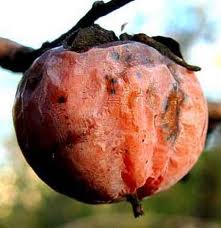
ROTTEN AND USELESS

Jeremiah 2:1—24

Getting into the “prophetic meat” of this book, we should note that this first major section of prophecies, chapters 2—6, probably came during the reign of King Josiah. Chapter 7 comes from the the first year of Jehoiakim, and chapters 8—10 more than likely were prophecies given under either Josiah or Jehoiakim. These prophecies are grouped together because they seem to have a common theme—an indictment against the house of Israel. They reveal the thing that most lay heavy on the prophet’s heart during those early years. Some of the prophecies are addressed to what was left of Israel, but mostly he was speaking to Judah and the house of Jacob.

In a curious side note, we can be almost certain that the prophecies as they are preserved for us here are not identical with the prophecies as they were first written. Scholars are pretty sure this first section of prophecies was part of the scroll that was destroyed by Jehoiakim in chapter 36. So what we are reading, then, is a kind of “second edition,” dictated by Jeremiah to his faithful secretary, Baruch. This may explain why the book of Jeremiah seems so disjointed; it is, in fact, not in chronological order, which explains why Bible students often get frustrated studying it.

So Jeremiah took another scroll and gave it to the scribe Baruch son of Neriah, and as Jeremiah dictated, Baruch wrote on it all the words of the scroll that Jehoiakim king of Judah had burned in the fire. And many similar words were added to them. (Jeremiah 36:32)

The key verse of chapter 2 could be said to be verse 14 because it draws attention to a very important fact concerning, not Israel, but rather something else:

Is Israel a servant, a slave by birth? Why then has he become plunder?

In asking this rhetorical question, the Lord through His prophet hits on the destructive power of sin. Is turns everything it touches into “plunder,” or we might say it spoils anything it comes near. How many lives lived for God have been cut short and spoiled because sin touched them? What do you do with food left out on the counter when you notice a fly or two landing on it? Most of us  don’t take any chances—we get rid of it. Sin is the fly on the hotdog.

1. Painful memories, 2:1—3

As the angels around the throne of God responded,“Yes, Lord God Almighty, true and just are your judgments” (Revelation 16:7), we’re about to discover that God was absolutely just in passing judgment on His faithless people. We’re going to learn that there is a just reason for every judgment of God. Before the very first brick of the very first wall came tumbling down, God would tell His people every reason for the coming attack.  God would, through His prophetic Word, force His people to look at the sins they committed before His judgment fell.

Your wickedness will punish you; your backsliding will rebuke you. (vs. 19)

As if to show Israel how far she had fallen, the Lord begins His message with a haunting contrast: what they used to be versus what they had become.

There was fellowship

I remember the devotion of your youth… (vs. 2)

Using the intimate figure of love and marriage, the Lord brings back to their memory the “good old days” when His people followed after Him in the wilderness. Those where hard days, but as far as the Lord was concerned they were the best days because it was back then that the people trusted and followed Him. During those early years of privation in the desert wilderness, when Israel was little more than a nomadic nation, she was utterly dependent on God and He had no rivals for her love. In those days, Israel could look to no one else for help and she was completely devoted to Him because He was her sustenance.

It wouldn’t be until after she entered the Promised Land that Israel began to trust in her own resources. Instead of God’s blessing bringing His people closer to Him, the people took His blessing and replaced Him with it. Sadly, in time, Israel began more and more to rely on “secondary securities.” Israel had lost her first love.

There was obedience

...[you] followed me through the wilderness… (vs. 2b)

The people of Israel not only had constant fellowship with God during their wilderness wandering, but they followed Him in obedience. It’s interesting that when we read of that experience we see where the people seemed to constantly fall into sin, yet God seems to remember those years with fondness. Perhaps we can learn a minor but encouraging lesson here. We may be prone to be harder on ourselves than we ought when we struggle in living out our faith. He knows what we are capable of and He knows our weaknesses. Job got this absolutely right: God knows our “bent.” He knows us better than we know ourselves.

But they followed God; they went where He told them to go. They obeyed Him.

There was separation

Israel was holy to the Lord… (vs. 3)

It was during those “good old days” under Moses that Israel was “holy.” In other words, she was completely separate from the nations all around her. She belonged to her God completely and unreservedly. But Israel’s holiness—her separation—was for a purpose. She was separated “to the Lord.” In other words, Israel was not some weird stand-offish band of nomads. She belonged to the Lord and she served the Lord; she did what God told her to do, and generally her conduct reflected the relationship she had with God.

2. Painful decision

In due course, Israel had gone astray. In fact, in God’s eyes they had committed to grievous evils:

My people have committed two sins: They have forsaken me, the spring of living water, and have dug their own cisterns, broken cisterns that cannot hold water.” (vs. 13)

This is a powerful metaphor, all the more so when we stop and consider where they were: the deserts of Palestine, one of the most arid destinations on earth!

The had forsaken God

Imagine the insanity of turning your back on God. Turning one’s back on God would be just as insane as leaving a flowing fountain of cool, pure water was for the stagnant, stinky waster of a dirty well. Why would any believer want to do such a crazy thing? It all goes back to the destructive power of sin. It literally drives a person to do the things they would never, ever do.

In turning their collective back on God, the people of God determined to leave the source of all that was good in their lives. To forsake anyone is to treat them as though they were a stranger. Israel began to act as though God had no claim on them; as if they no longer needed Him.

They dug their own cisterns

In other words, instead of depending on the Lord, they forged ahead and did what they thought was best. There was nothing wrong with digging a well or two, but it displeased God. Why? Because they were supposed to be trusting in Him to provide. That didn’t necessarily mean He never wanted them to dig wells or work to provide for themselves, but clearly they did so against His will.

Of course, the Lord isn’t just talking about wells here. He is also speaking metaphorically. Israel had “outgrown” their God. They preferred copying what other nations were doing to trusting in God. Even if what those other nations were doing proved to be disastrous and harmful to their citizens, Israel seemed bent on emulating them; hence the “broken cisterns.”

Man-made cisterns come in all shapes and sizes. From worldly acclaim to possessions to other man-made philosophies. Anything that takes the place of the true Living Waters in your life is a well you dug, and no matter how carefully you planned and dug it, your well will always be cracked and dirty and polluted. The waters of your own well will never satisfy you, they will never refresh you, and they will never benefit you.

Jeremiah’s words remind us of what another prophet would write:

Come, all you who are thirsty, come to the waters; and you who have no money, come, buy and eat! Come, buy wine and milk without money and without cost. Why spend money on what is not bread, and your labor on what does not satisfy? Listen, listen to me, and eat what is good, and you will delight in the richest of fare. (Isaiah 55:1—2)

3. Terrible result

Because of Israel’s interest in herself instead of in God, she degenerated quickly. That’s the point of verse 14:

Why then has he become plunder?

How did it happen? What was the fly on the hotdog?

Israel became spoiled like a degenerate plant

I had planted you like a choice vine of sound and reliable stock. How then did you turn against me into a corrupt, wild vine? (vs. 21)

This whole section is utterly heartbreaking. God sees His people as servants, slaves, and the plunder of other nations. What’s truly sad is that they were never meant to be any of those things! They were once a people living in freedom and liberty, but now they, inexplicably, chose servitude to man by getting involved politically with other nations, like Egypt and Assyria. God’s overriding question is “Why?”

Israel was meant for so much more, yet they threw it all away like so much trash. They had grown into a freakish version of what God had planned for them. Their sins were far deeper than mere surface dirt; her sins had taken root and and forever corrupted the whole plant.

Israel became like a stained garment

Although you wash yourself with soap and use an abundance of cleansing powder, the stain of your guilt is still before me… (vs. 22)

Like grass-stained clothes, the filth of Israel’s accumulated sin forever stained them; they could no longer wash themselves. When you leave God, there is nothing you can do to make up for that.

Israel became like a wild donkey

[Israel became] a wild donkey accustomed to the desert, sniffing the wind in her craving—in her heat who can restrain her? Any males that pursue her need not tire themselves; at mating time they will find her. (vs. 24)

A donkey can be a very useful animal, but a wild donkey is unruly and good for nothing. A donkey running around represents wasted energy, uncontrolled lusts, and useless efforts. This is what those who turn their back on God look like to Him. It’s not a pretty sight, but it is an accurate picture.

Israel had reached the point of no return. As we read the prophecy of Jeremiah, we are reading ancient history. Israel’s fate was sealed a long time ago. But today, we serve a God of “the second chance.”

Even now,” declares the Lord, “return to me with all your heart, with fasting and weeping and mourning.” (Joel 2:12)


Bookmark and Share

Another great day!

Blog Stats

  • 408,223 hits

Never miss a new post again.

Archives

Email Subscription

Enter your email address to subscribe to this blog and receive notifications of new posts by email.

Join 282 other subscribers
Follow revdocporter on Twitter

Who’d have guessed?

My Conservative Identity:

You are an Anti-government Gunslinger, also known as a libertarian conservative. You believe in smaller government, states’ rights, gun rights, and that, as Reagan once said, “The nine most terrifying words in the English language are, ‘I’m from the government and I’m here to help.’”

Take the quiz at www.FightLiberals.com

Photobucket